

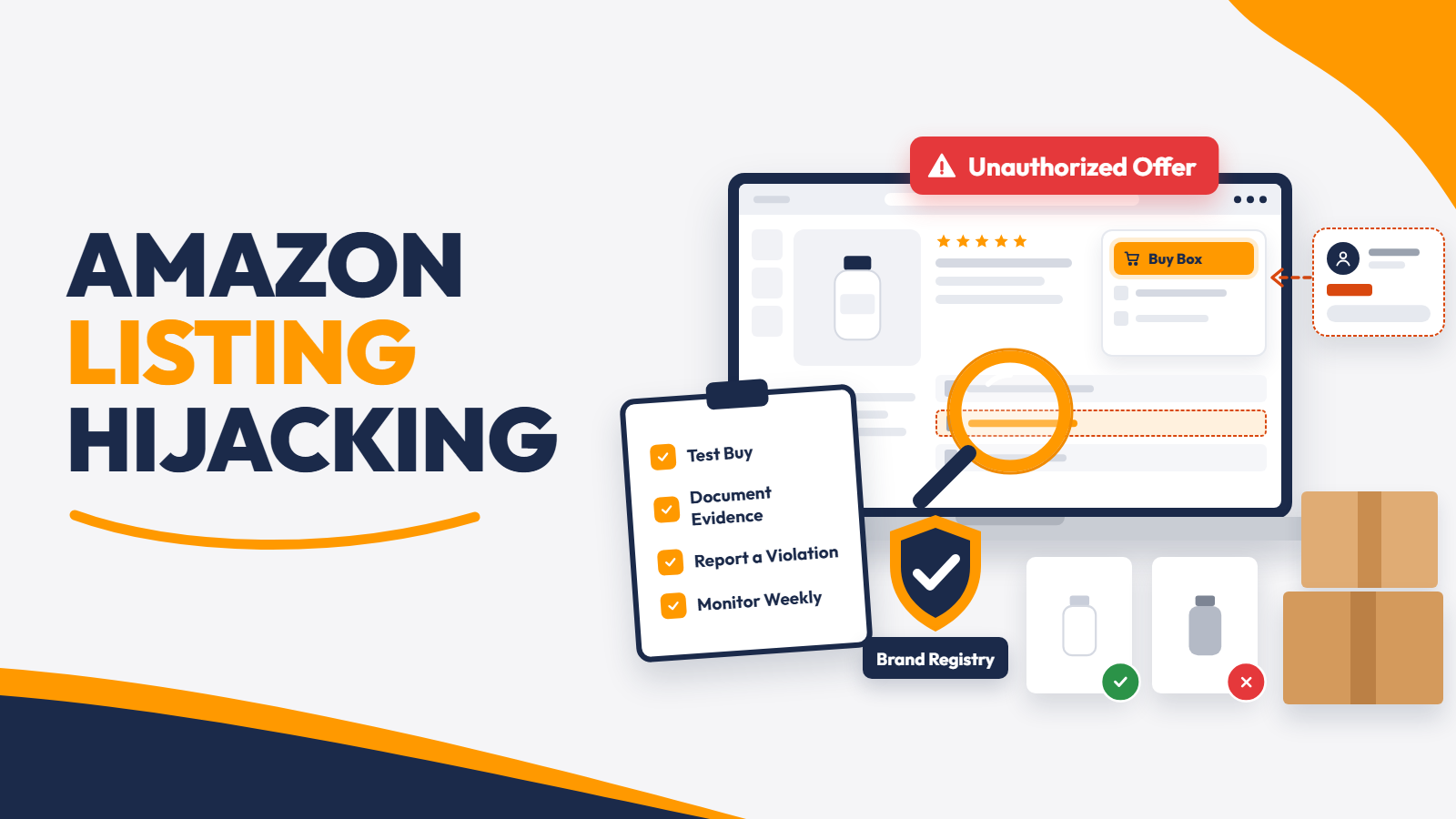
Amazon listing hijacking is one of the fastest ways to lose everything you’ve built on a listing. You fund the inventory, earn the reviews, and rank the product, then one morning your Buy Box is gone, and a seller you’ve never heard of is shipping under your ASIN. Here’s how to catch it fast and what to actually do once you have.
How Listing Hijacking Actually Works
Listing hijacking is when another seller jumps onto your product listing and starts selling on it without your permission, usually shipping a counterfeit, a cheap knockoff, or something that isn’t even your product at all. They haven’t built anything of their own. They’re using the reviews you earned, the rank you worked for, and the trust your customers already have in that listing, and walking away with the sale while your buyer ends up with a product you never sent them.
Signs You’ve Been Hijacked
Listing hijacking typically appears as a pattern rather than a signal event. Monitor your ASINs for these indicators:
- Unfamiliar offers: Regularly review the “Other Seller on Amazon” section and your Seller Central offer view. If you sell exclusively, any additional offer warrants investigation.
- Unexplained Buy Box loss: If your pricing is competitive and your account health is strong, losing the Buy Box is a red flag.
- Abnormal pricing: Offers well below your cost often signal counterfeit or diverted inventory.
- Product mismatch complaints: Reviews or buyer messages citing incorrect packaging, inferior quality, missing inserts, or damaged units may indicate another seller’s inventory is fulfilling orders on your Amazon listing.
- Conversion decline: If traffic is stable but conversion rate and order volume drop, identify who is winning the Buy Box.
Why It Happens
Private-label products are prime targets because they combine proven demand, strong reviews, and a listing that already ranks well. Any seller can attempt to attach an offer to an existing ASIN, and weak brand controls make that easier.
Some sellers are reselling genuine units they bought through retail or other channels. Others list counterfeit or look-alike products. The distinction matters, because Amazon treats resale of genuine inventory differently from counterfeit activity, and your response should follow the evidence. Before you file anything in the brand registry, confirm which situation you are dealing with so your report is accurate and holds up.
What to Do When You Suspect Hijacking
When you suspect unauthorized offers on your ASIN, respond in a structured sequence. Acting quickly matters, but a report without supporting evidence can weaken your case.
- Make a test buy: Order a unit and compare it against your genuine product, packaging, labeling, materials, and quality.
- Review the seller: Check seller feedback, business information, and other offers. Unrelated product categories or recent authenticity complaints may indicate a risk.
- Document everything: Screenshot the offer page, the seller’s storefront, their pricing, and the date. Save the Buy Box history if you have it. Evidence you collect now is what your report will rest on.
- Identify the Violation: Determine whether it involves counterfeit products, unauthorized reselling, or incorrect listing content. Ensure your claim matches the available evidence.
- Use the Right Channel: Brand-registered sellers should use Report a Violation for faster reporting
- Follow up with documentation: If the report is rejected, respond with supporting evidence instead of resubmitting the same complaint.
How to Prevent Amazon Listing Hijacking
Prevention works better when the groundwork is already in place.
- Secure Brand Registry: Maintain an active Brand Registry account and registered trademark to access Amazon’s brand protection tools, including Report a Violation.
- Keep Proof of Authenticity: Maintain up-to-date invoices, manufacturer records, and batch details to verify genuine products and support infringement claims
- Define your authorized sellers: Put distributor terms in writing and track where your Amazon inventory goes.
- Monitor on a schedule: Check your offers, Buy Box share, and review sentiment weekly, not only when something feels off. Early detection shortens everything that follows.
- Establish a Response Process: Assign clear responsibility for gathering evidence, reporting violations, and following up with Amazon to ensure prompt action.
Frequently Asked Questions
Does every other seller on my listing mean I’m being hijacked?
No. Authorized resellers and distributors can appear legitimately. Confirm who the seller is and what they are shipping before treating it as a violation.
Can a brand registry stop hijacking completely?
No. It gives you faster reporting tools, automated protections, and access to programs like Project Zero and Transparency, but it does not make a listing immune.
Is transparency worth it for listing protection?
It depends on the product. Unit-level serialization lets Amazon verify authenticity at the item level, but it adds cost and operational work. Weigh it against the counterfeit risk for each product.
Think You’re Being Hijacked? Let’s Confirm It
A hijacked listing can quietly damage your reviews and account health while you’re still deciding whether it’s real. AMZOS monitors and manages your Amazon account so unauthorized sellers don’t get a chance to settle in. Get your free Amazon account audit today and find out where your listings are exposed.