

Overview
A US-based kitchenware brand sourced from China with 60- to 90-day lead times. The supply chain looked functional from the outside. Inside, the story was different. Best-selling ASINs kept running out of stock during peak demand while slow-moving products piled up in FBA warehouses, collecting long-term storage fees. Nobody was making replenishment decisions based on data. Orders went out when someone noticed stock was low, which, with a 90-day lead time, was already weeks too late. The brand was losing sales on the products that mattered and paying fees on the ones that did not.
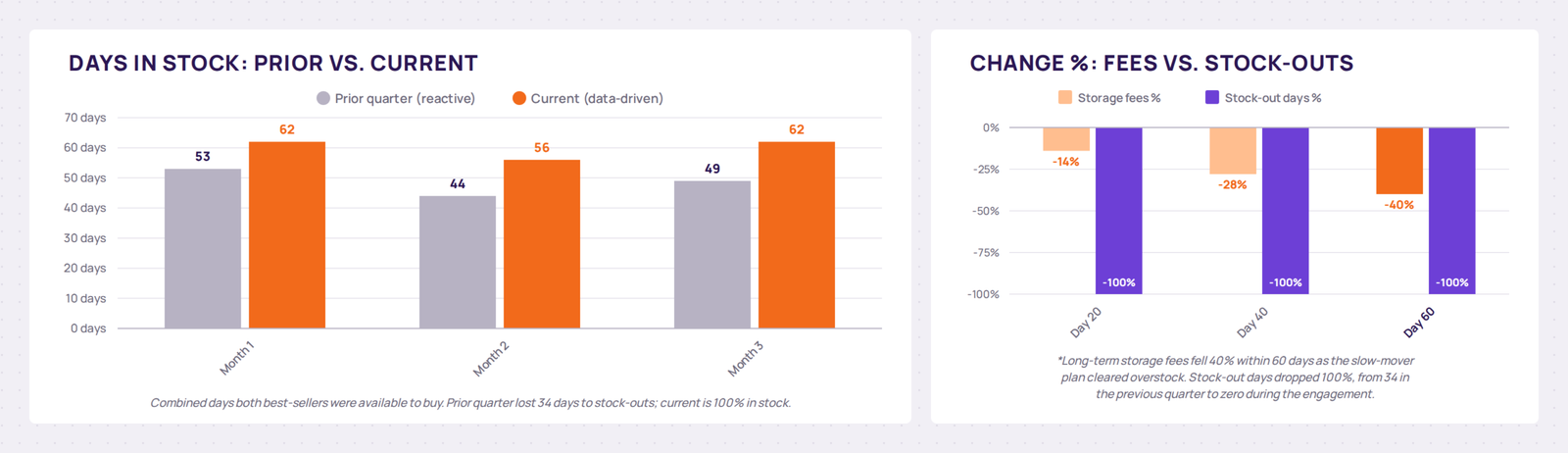
Two best-selling ASINs were out of stock for 34 days combined during peak demand.
Each stock-out caused ranking drops and required extra ad spend to recover.
Slow-moving SKUs built up excess inventory, increasing storage fees and limiting FBA capacity.
No replenishment system existed, so purchase decisions were reactive and based on guesswork.
Mapped 90 days of sales data against actual supplier lead times for every ASIN to calculate exactly when each product needed to be reordered to arrive before stock hit zero.
Built a planning system that flagged reorder points automatically based on current stock, daily sales rate, supplier lead time, and FBA processing time, moving purchase decisions weeks earlier than before
Identified overstock inventory and reduced storage fees through pricing adjustments and removal orders
Managed supplier timelines, production schedules, and shipment documents to keep replenishment on track.
From reactive guesswork to a system that runs ahead of the problem
vs 34 combined out-of-stock days in the previous quarter
Achieved within 60 days as overstock inventory was cleared
Affected ASINs held their positions without any additional recovery ad spend