

Overview
A US-based home goods brand had been selling on Amazon for two years and was generating around $60,000 in monthly revenue. The numbers looked decent on the surface, but the margins told a different story. ACOS was running at 41%, ad spend was consuming most of the profit, and the brand was essentially running to stand still. Every time they tried to scale by increasing the budget, ACOS climbed higher, and margins got thinner. They came to AMZOS with one clear instruction: fix the profitability first. Once the account was running efficiently, they wanted to scale. That is exactly the order we followed.
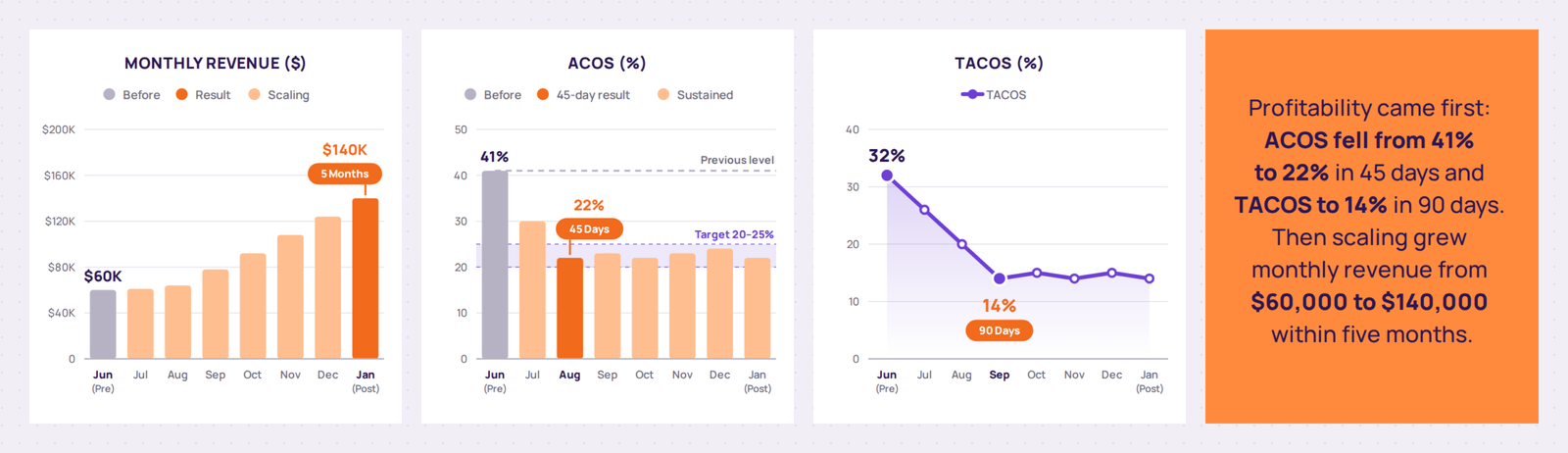
ACOS was running at 41% against a target of 20 to 25%, with no clear visibility into which campaigns or search terms were responsible for the overspend.
TACOS had climbed to 32%, meaning advertising was consuming nearly a third of total revenue and leaving almost nothing for margin after fees.
Branded and non-branded traffic, competitor targeting, and discovery campaigns were all running inside the same structure with no separation, making it impossible to control, spend, or evaluate what was actually working.
Reviewed 60 days of search term data to identify profitable campaigns and wasted ad spend before making changes.
Separated high-converting exact-match terms from broad discovery traffic, giving each its own budget and controls.
Set target ACOS and bids based on each SKU’s actual margin instead of using the same targets across the account.
Once ACOS stayed within the target range, increased budgets on top-performing campaigns while keeping TACOS within the brand’s margin threshold.
Profitability restored first. Revenue scaled second. Both held simultaneously
Dropped within 45 days of the profitability restructure
Fell within 90 days, freeing up margin the brand had not seen in years
Grew within 5 months once the account was profitable
Achieved without sacrificing BSR rankings during scaling phase