

Overview
A US-based brand had been selling through FBA for over two years and had never once reviewed their account for reimbursement eligibility. They assumed Amazon handled discrepancies automatically. What they did not know was that industry data shows the average FBA seller loses 1 to 3% of annual revenue to unresolved discrepancies, and approximately 40% of eligible claims go uncollected even with Amazon’s own proactive reimbursement program. When AMZOS conducted an initial audit, the brand had a significant backlog of lost, damaged, and mishandled inventory sitting unclaimed across multiple reimbursement categories.
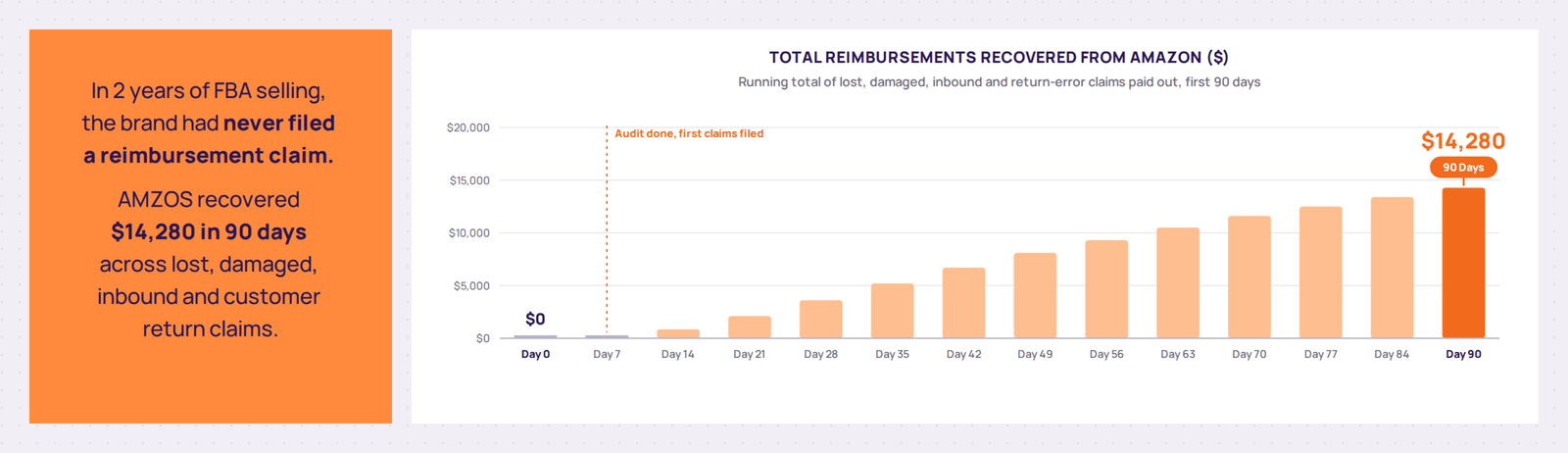
No reimbursement claims had ever been filed despite two years of active FBA selling across multiple SKUs.
Lost and damaged inventory cases were sitting in Amazon's system unresolved with no one on the brand's side tracking or following up.
Inbound shipment discrepancies, where units sent to Amazon did not match units received, had gone unrecorded across multiple shipments.
Amazon shortened the reimbursement claim window to 60 days in 2024 for most categories, meaning eligible claims were expiring without the brand even knowing they existed.
Reviewed the brand's complete FBA transaction history, inventory adjustment reports, and inbound shipment records to map every eligible reimbursement category before filing a single claim.
Prepared and submitted claims across lost inventory, damaged units, inbound shipment discrepancies, and customer return errors, with supporting documentation pulled directly from Amazon's own Seller Central reports.
Monitored every open claim through Amazon's case management system, following up on pending cases and escalating where Amazon had not responded within the expected window.
Set up a recurring monthly audit process to catch new discrepancies within the 60-day claim window before they expire unclaimed.
Two years of unclaimed losses recovered in a single engagement.
Across lost inventory, damaged units, shipment discrepancies, and return errors in 90 days
Reimbursement claims filed across four eligible categories for the first time in 2 years