

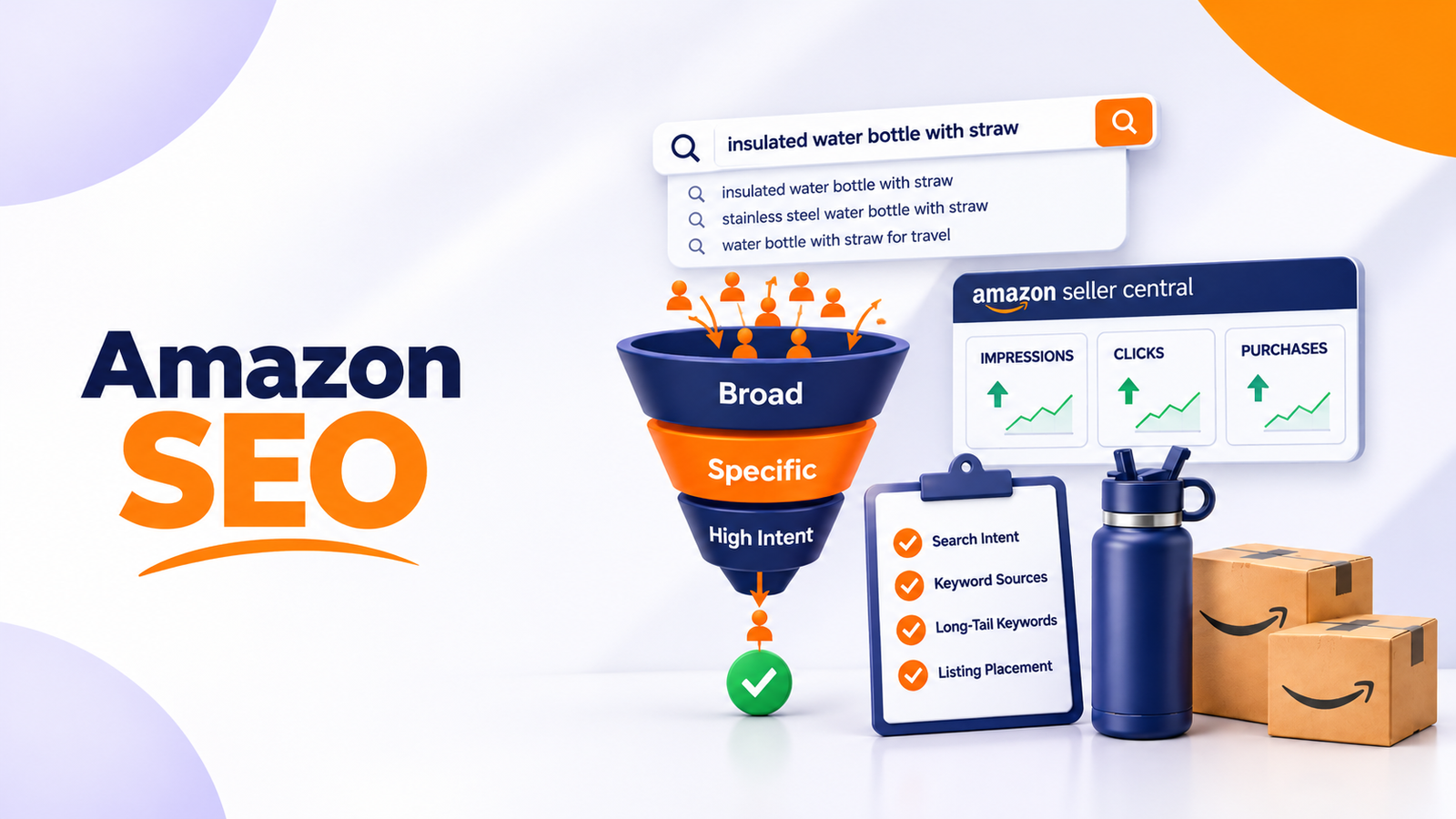
Amazon SEO isn’t about ranking for the most keywords. It’s about reaching shoppers who want your product. When listings earn impressions and clicks but few sales, the traffic is often mismatched. Effective Amazon keyword research connects your product to the right searches, but sales still depend on price, reviews, and listing quality.
Start with Amazon Search Intent
Before collecting keywords, work out what the shopper actually wants. Searches fall into three groups:
- Broad category: like “water bottle.” High volume, mixed intent, heavy competition.
- Specific product: like “insulated stainless steel water bottle 32 oz.” The shopper knows what they want.
- High-intent searches: like “leakproof water bottle with straw lid for gym.” These name a use case and a requirement, so the shopper is close to buying.
If that’s your product, the last term is often worth more despite lower volume, because it matches your listing directly. Always judge keywords against your actual product: features, size, material, use case, and buyer expectations. A mismatched term brings clicks that don’t convert.
Find Keyword Opportunities From Multiple Sources
No single source gives the full picture, so combine several:
- Amazon Search Bar: Autocomplete and top results show how shoppers actually phrase searches.
- Competitor Listings: Titles and bullets offer clues, not answers.
- Brand Analytics: Brand-registered sellers see search frequency and click and purchase behavior.
- Search Query Performance: Shows impressions, clicks, and purchases for your own products.
- Keyword Tools: Tools like Helium 10 or Soldscope give estimates, so compare terms rather than trust exact volumes.
- Reviews and Questions: Shoppers’ own wording often makes the best long-tail keywords.
Report access depends on your Brand Registry status, so check what your Seller Central account shows.
Evaluate Keywords Beyond Search Volume
Search volume shows how many people search a term, not whether they want your product or whether you can realistically rank for it. Weigh each keyword on relevance, buying intent, competition, estimated demand, fit with shopper expectations, and your own performance data.
Illustrative example: “Water bottle” has huge volume but loose intent. “Insulated water bottle with straw 32 oz” is smaller, less competitive, and draws shoppers who want exactly what you sell.
Build and Organize Your Keyword List
Raw research gets messy fast, so move it into a spreadsheet and group terms by product relevance, search intent, features, use cases, and customer needs from reviews. Then pick a few primary keywords that describe your product most directly. The rest become supporting long-tail terms. No set number is required. Grouping simply helps you prioritize and cut repeated or irrelevant terms before they reach your copy.
Place Keyword Strategies In Your Listing
Exact rules vary by category, but these hold broadly:
- Title: Include the primary keywords with high search volume and high relevance to the product
- Bullet points: Incorporate the remaining most relevant keywords naturally, along with features and benefits.
- Description: Explain use cases and provide product details, keeping the content focused on shoppers.
- Backend terms: Add relevant terms you couldn’t fit naturally elsewhere. Skip brand names, repeating words, and anything irrelevant.
Measure Whether Keywords Bring the Right Traffic
Keyword research stays a hypothesis until performance data backs it. Track impressions, click-through rate, conversion rate, organic sales, and search query performance data where you have access. PPC search term reports also show which queries earn clicks and orders. Strong impressions with weak clicks suggest your title or main image is not matching the search. Plenty of clicks with few purchases point to a relevance gap, or to price, reviews, or availability. Change one thing at a time so you know what moved the numbers.
Common Keyword Research Mistakes
- Blindly copying competitors: Their product and keyword choices may not match yours.
- Repeating keywords: It adds clutter, not ranking power.
- Treating research as one-and-done: Search behavior and competition shift, so revisit your list regularly.
- Changing copy on thin data: Give each change enough time and traffic to show a real trend.
- Skipping long-tail keywords: Specific phrases are often where smaller listings gain traction.
- Choosing by volume alone: High numbers attract the wrong audience, so check intent and fit first.
- Using terms that misdescribe your product: They hurt conversions and can lead to returns and poor reviews.
Frequently Asked Questions
Do Amazon ads help my organic keyword ranking?
Ads can help indirectly. Sales from sponsored campaigns count toward your product’s sales history, which may support organic visibility over time. Treat ads as a way to test keywords and gather data, not as a guaranteed shortcut to higher ranking.
How can I find keywords for a brand new product with no sales data?
Run an automatic Sponsored Products campaign and review the search term report after a few weeks. It shows the real queries shoppers used before clicking or buying, so you can keep converting terms and add irrelevant ones as negative keywords.
Should I add common misspellings to my listing?
Amazon search typically recognizes common misspellings, so putting them in your title or bullets hurts readability and credibility. If you still want to cover one, a backend search term field is the safer place.
Ready to Turn Search Traffic Into Real Sales?
Wrong keywords bring clicks that never convert. With Amazon product listing optimization service, AMZOS finds the search terms your buyers actually use and builds your listings around them.